
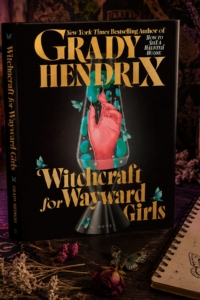
I went into Witchcraft for Wayward Girls expecting a dark, witchy story, but what I found was something much more layered. It is historical, heartbreaking, unsettling, and surprisingly tender, with the fantasy elements woven into a story that is already horrifying enough without any magic at all.
The novel opens by reminding us how unmarried pregnant girls were spoken about across generations. They were called “morons,” “needy,” “wayward,” and treated as though surrendering their babies was a punishment they were morally obligated to accept. That historical framing immediately establishes what Fern and the other girls are up against. They are not viewed as young women in crisis. They are treated as problems that need to be hidden and corrected.
For a male writer, Grady Hendrix captures the female perspective remarkably well. Fern, whose real name is Neva, feels completely believable as a frightened fifteen-year-old who is still very much a child, even though everyone around her insists she should accept adult consequences without adult knowledge or support. One of the most powerful lines comes early in the novel: “Whatever you wanted to call us, we were children.” That sentence becomes the emotional center of the entire book.
Hendrix clearly did a great deal of research into maternity homes and the treatment of unmarried pregnant girls during this period. The details feel specific and lived-in, from Fern being forced to wear her father’s wedding ring in public to the Home stripping the girls of their real names and hometowns. Neva becomes “Fern from Baltimore,” not because she chooses that identity, but because the institution wants to erase the person she was before she arrived. The rules are supposedly designed to protect the girls’ privacy, but they also isolate them and make them easier to control.
The treatment of the girls is especially disturbing because it is presented as help. Miss Wellwood describes them as her “garden of girls” while also telling Fern that she acted like a “barnyard animal” and must obey without question. The Home presents shame, pain, and separation as moral rehabilitation. It is difficult to read because the adults truly believe, or at least pretend to believe, that taking away the girls’ identities and choices is for their own good.
I also loved the way Hendrix uses witchcraft in the story. It is not simply included to make the novel spooky. The magic becomes connected to power, autonomy, anger, and the desperate desire to regain control over bodies and futures that everyone else has claimed. The girls are told they are sinful, selfish, and dangerous, so there is something very fitting about them finding strength in the very thing they have been taught to fear.
What impressed me most was how human the girls feel. They are not written as interchangeable victims. Fern, Rose, Hazel, Holly, and the others have different personalities, fears, flaws, and ways of surviving. They argue, make mistakes, protect one another, and sometimes hurt each other. Their friendships give the story its heart, particularly because they are surrounded by adults who refuse to treat them with real compassion.
The novel is simultaneously eye-opening, heartfelt, historical, and fantastical. It shines a light on a part of women’s history that was often hidden behind phrases like “going away for a while” or “staying with relatives.” It also understands that the greatest horror is not necessarily the devil or witchcraft. As Fern explains, the girls were “too young to understand that there were worse things than the devil.”
I greatly enjoyed Witchcraft for Wayward Girls. It is emotionally difficult at times, but it is also compassionate, empowering, and memorable. Hendrix does not just tell a story about girls who discover magic. He tells a story about girls who were stripped of their names, choices, and voices, then began to realize they were never as powerless as they had been taught to believe.