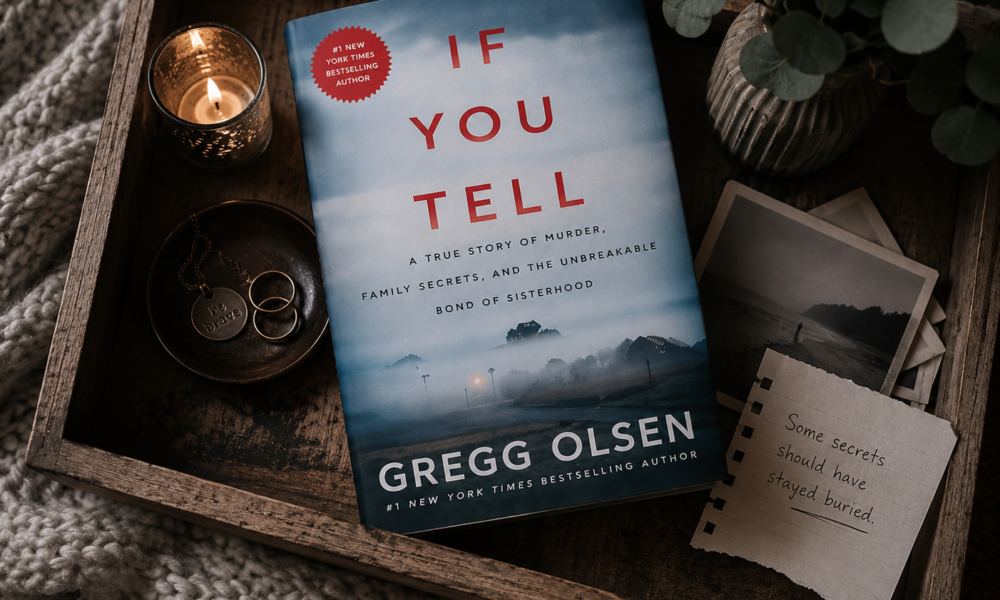
I finished If You Tell with that heavy true crime feeling that lingers, and it is a lot. I rated it 3.75 out of 5, mostly because it took me a while to feel truly pulled into the book. The prologue did not hook me, and early on I felt like I was reading at a distance. I had to push myself, and once I was fully in, it became difficult to keep going for an entirely different reason.
I also read it intentionally blind. I purposely did not look up the case, the people, or the crimes until after I finished. I wanted the book to unfold on its own, without my brain jumping ahead. Olsen notes in his Author’s Note that he is essentially piecing a story together from interviews and investigative documents, and that “shared memories are like jagged puzzle pieces.” That helped me understand why it sometimes reads like a reconstruction instead of a slick narrative.
The moment the book finally grabbed me was when Shelly’s cruelty starts concentrating on her friend Kathy, and you can suddenly see the shape of what this household really is. There is an exchange where Nikki asks, “Why does Kathy let Mom do that crap to her?” and Shane answers, “Kathy’s scared shitless of her. Like we all are.” That was the “oh” moment for me. Not just because it is horrifying, but because it captures what this book is really about: coercion, fear, and a system where people comply because the alternative is worse.
By the end, I felt relief that Shelly was caught and sentenced, and I also felt devastated and angry for the victims and for her daughters. It breaks my heart that Shelly has been released and gets to be free when her victims were essentially placed on an unspoken death row in that home. The daughters did not create any of it, but the shame, powerlessness, and emotional weight they carry forward feels unimaginable. There is a special kind of cruelty in surviving something and still having to live with it every day.
This is a sad, disheartening book. It is hard to read. It also feels necessary. Not because it is entertaining, but because it shows what it looks like when someone builds a closed system around themselves and uses fear as the lock.